Mapping Connections Between Device Sensor Data and Adaptive Difficulty Scaling in Browser-Based Chance Simulation Platforms
Written by Erik Zimmermann · Oct 16, 2026
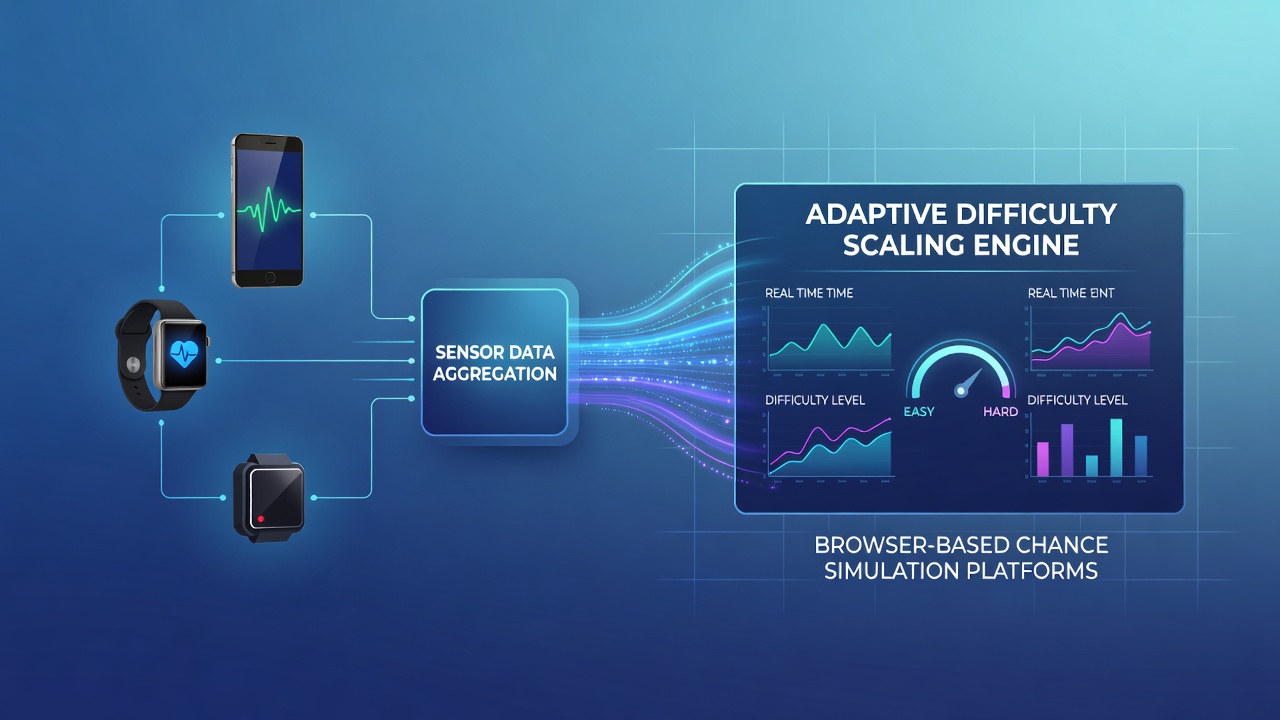
Mapping Connections Between Device Sensor Data and Adaptive Difficulty Scaling in Browser-Based Chance Simulation Platforms
Device sensors embedded in modern browsers provide continuous streams of orientation, motion, and environmental data that platforms map directly to adaptive difficulty systems, and these connections allow real-time adjustments during chance simulation sessions. Researchers at institutions across North America and Europe have documented how accelerometer and gyroscope readings integrate with probability engines to modify outcome parameters without requiring user input beyond normal device handling. Data from the Web Sensor API specifications shows that browsers expose raw values for acceleration, rotation rate, and magnetic field orientation, which developers then normalize into calibration inputs for scaling routines.
Sensor Data Acquisition in Browser Environments
Browser-based platforms access device sensors through standardized JavaScript interfaces that operate across mobile and desktop environments, while permission prompts and security policies govern data collection in most jurisdictions. Studies conducted by the National Institute of Standards and Technology highlight that sampling rates typically range from 60 to 120 hertz for motion sensors, creating dense datasets that algorithms process to detect subtle user movements or device stability patterns. These patterns feed into mapping functions that correlate physical handling with engagement metrics, and such correlations enable platforms to shift difficulty thresholds when specific motion signatures appear consistently during sessions.
Mapping Techniques Linking Sensors to Difficulty Parameters
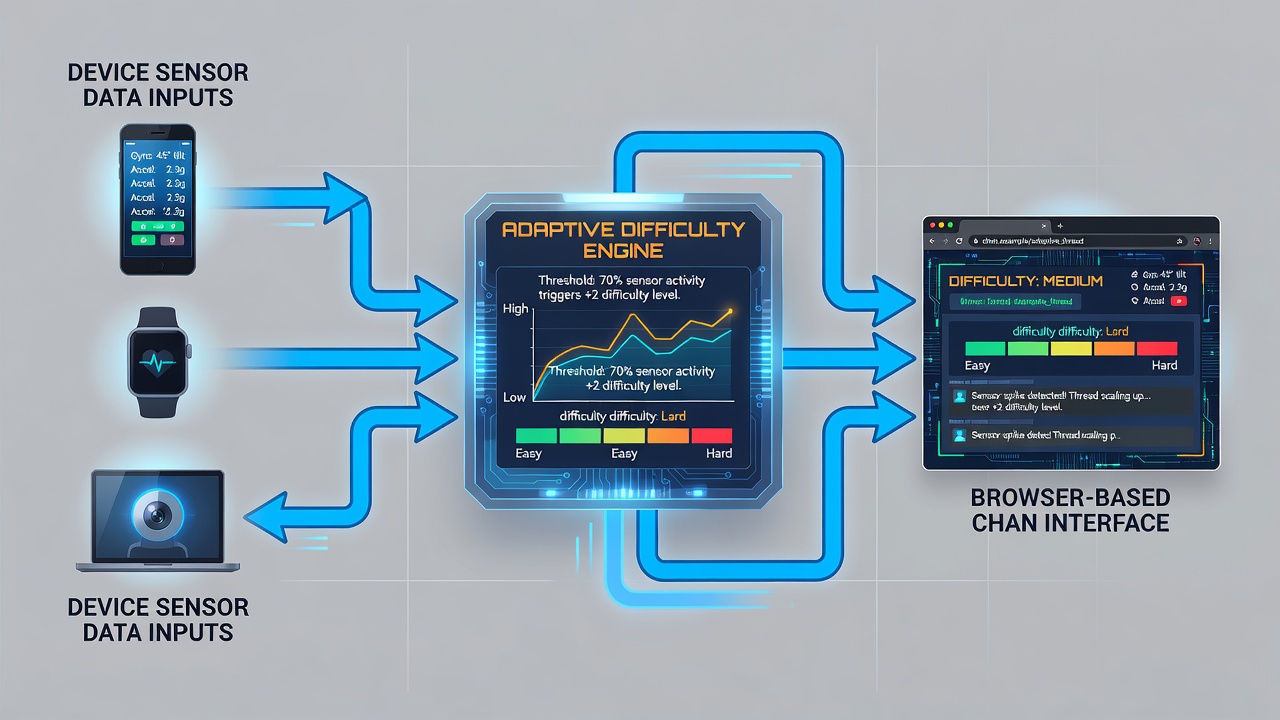
Developers construct mapping layers that translate raw sensor vectors into scalar modifiers for chance simulation engines, and these layers often employ machine learning models trained on aggregated user interaction logs. Observers note that tilt angles detected by gyroscopes can trigger recalibration of random number generator bounds, whereas linear acceleration spikes may prompt temporary tightening or loosening of payout probability curves. Research indicates that fusion algorithms combine multiple sensor streams to reduce noise, producing more reliable signals for adaptive systems that respond within milliseconds of detected changes.
Implementation Examples Across Platforms
One development team working on portable simulation tools integrated device orientation data with session timers to adjust challenge intensity during extended play periods, and similar approaches appear in several commercial deployments reported in October 2026 industry updates. Another group mapped magnetometer readings to environmental context detection, allowing the system to recognize indoor versus outdoor usage and scale simulation parameters accordingly. These implementations rely on edge processing to minimize latency, while backend servers receive only aggregated mapping outputs rather than full sensor streams.
Regulatory and Technical Considerations in 2026
Regulatory frameworks in regions such as Australia and Canada require disclosure of data usage practices when sensor information influences game mechanics, and compliance documentation often references the specific mapping functions employed. Technical standards evolving through international bodies emphasize user consent granularity, allowing participants to limit sensor access while still accessing core simulation features. Figures from industry reports released in late 2026 reveal increasing adoption rates for these adaptive techniques, particularly in cross-device deployments where consistent difficulty scaling across hardware variations remains a priority.
Performance Impacts and Data Flow Optimization
Engineers optimize data pipelines to balance sensor sampling frequency against battery consumption and processing overhead, and tests demonstrate that selective activation of high-rate sensors during key decision points preserves responsiveness without excessive resource drain. Adaptive scaling benefits from these efficiencies because models receive cleaner, more timely inputs that reflect genuine user context rather than artifacts from over-sampling. Platforms that incorporate these optimizations report smoother transitions between difficulty states, although the underlying connections between sensor vectors and probability adjustments stay opaque to end users.
Conclusion
The connections between device sensor data and adaptive difficulty scaling continue to expand as browser capabilities and simulation platforms mature, with ongoing work focused on refining mapping accuracy and expanding sensor types integrated into these systems. Data from multiple regulatory and research sources underscores steady technical progress through October 2026, driven by both performance demands and compliance requirements across different markets. These developments maintain the core objective of delivering responsive, context-aware chance simulations while operating within established browser security and privacy boundaries.