Community Voting Systems Driving Custom Bonus Rounds in Digital Slot Tournaments
Written by Iris Neumann · Oct 30, 2026
Community Voting Systems Driving Custom Bonus Rounds in Digital Slot Tournaments
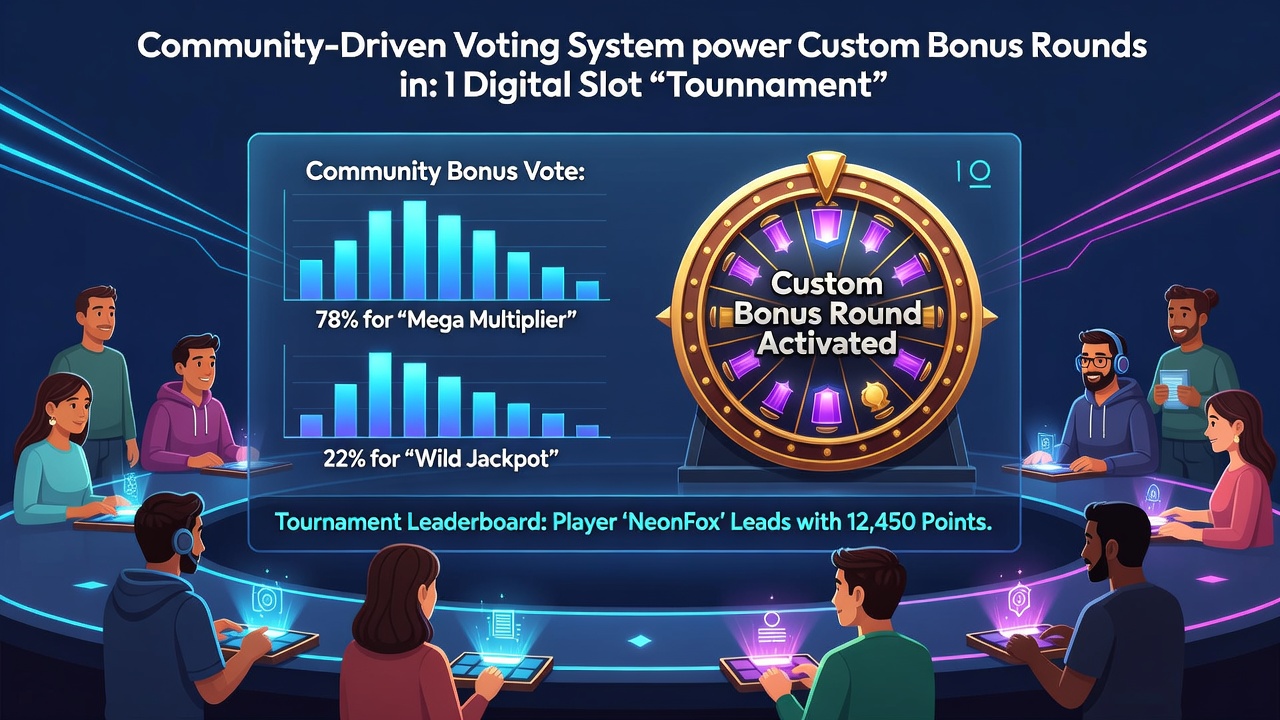
Community voting systems have emerged as a mechanism that lets participants in digital slot tournaments select elements of upcoming bonus rounds through structured polls and ranking tools integrated into tournament platforms. These systems aggregate player preferences in real time and feed the results directly into the game engine that generates the next round's features. Data collected across multiple operators shows that tournaments employing voting protocols record higher average session durations compared to those using fixed bonus structures.
Platform developers configure the voting interface to present options such as multiplier ranges, reel expansions, or symbol substitutions, and participants cast votes during designated windows that typically last between five and fifteen minutes. Once the voting period closes, the system tallies selections and applies the winning configuration to the subsequent bonus phase. Records maintained by several North American operators indicate that this cycle repeats across multiple rounds within a single tournament event, creating a sequence of player-determined variations.
Mechanics of Vote Collection and Implementation
Vote collection occurs through secure in-app modules that require authenticated tournament entry before displaying the ballot. Each participant receives a fixed number of votes per round, and some platforms allow delegation of votes to community representatives elected earlier in the event. The aggregated results transmit to the backend server, where algorithms map the highest-ranked choices onto predefined parameters that alter reel behavior, payout tables, or trigger frequencies. Observers note that this mapping process completes within seconds, allowing the next bonus round to launch without perceptible delay.
Technical specifications released by developers in 2025 detail the use of encrypted vote packets that prevent tampering and ensure auditability. Regulatory filings submitted to the Nevada Gaming Control Board describe audit trails that log every vote timestamp, participant identifier, and final configuration applied. These logs support compliance reviews and provide data for post-event analysis of participation patterns.
Observed Patterns in Bonus Customization
Analysis of tournament logs from operators active in October 2026 reveals recurring preferences among voters. Multiplier-based bonuses receive the largest share of votes in early rounds, while symbol-collection features gain traction in later stages when cumulative scores influence final rankings. One documented case involved a mid-October event where voters selected a hybrid bonus combining expanding wilds with progressive multipliers, resulting in a measurable shift in average payout distribution compared to the default bonus set.
Platforms track these shifts through internal dashboards that compare voted configurations against baseline performance metrics. Figures released by industry research groups indicate that custom bonus rounds selected through voting produce a wider range of outcome variances, which in turn affects leaderboard volatility throughout the tournament duration.
Integration with Tournament Scoring Systems
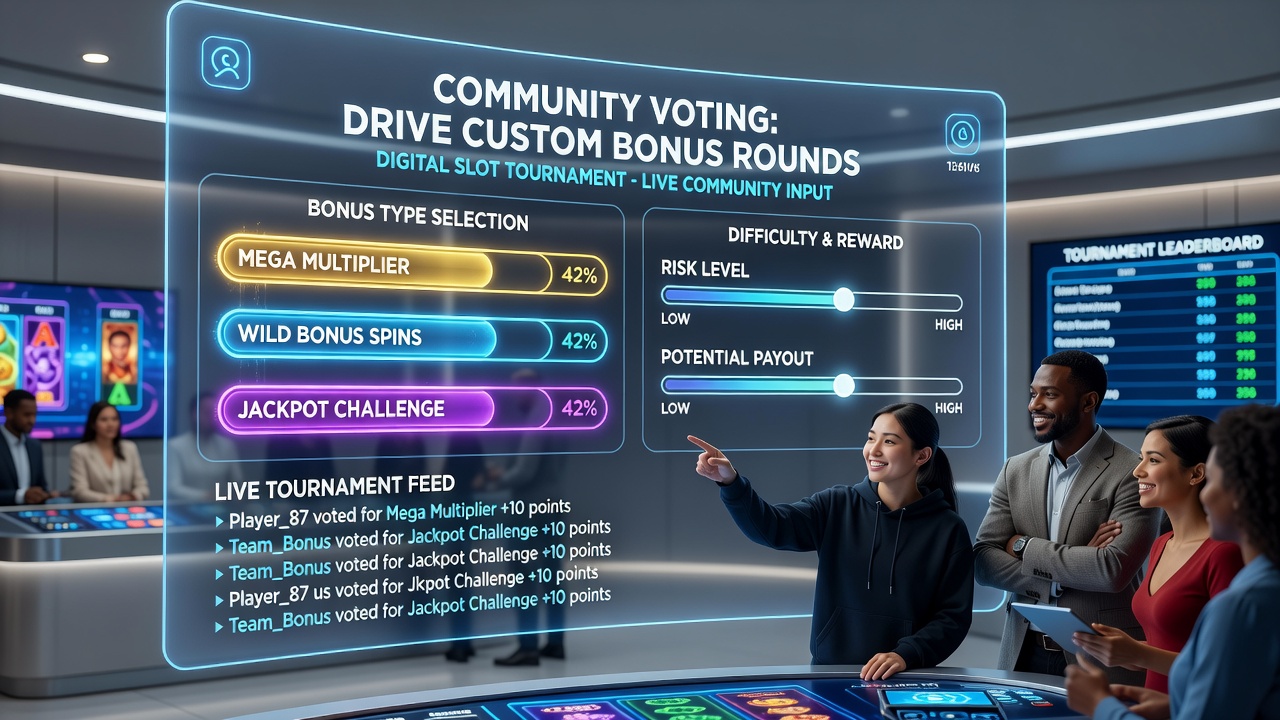
Scoring engines incorporate the outcomes of voted bonus rounds into overall tournament points through weighted formulas that account for both individual performance and the difficulty level of the chosen configuration. Higher-voted features often carry adjusted point multipliers that reflect the increased or decreased challenge they introduce. Documentation from European operators shows that these adjustments maintain competitive balance across skill levels while preserving the integrity of final standings.
Cross-border events scheduled in late 2026 have begun testing unified voting pools that merge inputs from multiple jurisdictions. Coordination between regional servers ensures that vote tallies reflect the combined participant base without violating local data-handling requirements. Reports filed with the New Jersey Division of Gaming Enforcement outline the data segmentation protocols used to separate identifiable player information from aggregated preference statistics.
Regulatory and Technical Considerations
Regulators in several markets require operators to publish the rules governing vote weighting and tie-breaking procedures before each tournament begins. These disclosures appear in the event terms and conditions and must remain accessible throughout the competition period. Industry associations such as the European Gaming and Betting Association have issued guidance documents that recommend standardized reporting formats for voting outcomes and their impact on prize distributions.
Security protocols include multi-factor authentication for vote submission and periodic third-party penetration testing of the voting infrastructure. Academic researchers affiliated with institutions studying digital gaming systems have published papers examining the statistical properties of community-selected bonus parameters, focusing on distribution fairness and resistance to coordinated voting blocs.
Conclusion
Community voting mechanisms continue to shape the structure of digital slot tournaments by transferring a degree of design authority to participants. The systems rely on established data pipelines, regulatory oversight, and technical safeguards that support transparent implementation. As operators expand these features across additional markets through October 2026 and beyond, the accumulated records provide a growing dataset for evaluating the effects of player-driven customization on tournament dynamics and operational compliance.